

Does reading keep us from thinking for ourselves?
The fine line between learning and outsourcing


Happy Tuesday! Today I’m sharing my first issue of The Nousletter here on Substack — a biweekly(ish) letter where I think aloud about the human condition. It’s a bit more “in-process” than my standard essays; I’d love for you to think along with me and share your thoughts in the comments. 💡
I read a lot. If you’re a fellow Eudaimoniac, so do you. But I’ve learned — through too many painful years of reading and failing to retain what I “learned” — that reading alone is not enough. We must do a lot of thinking inbetween.
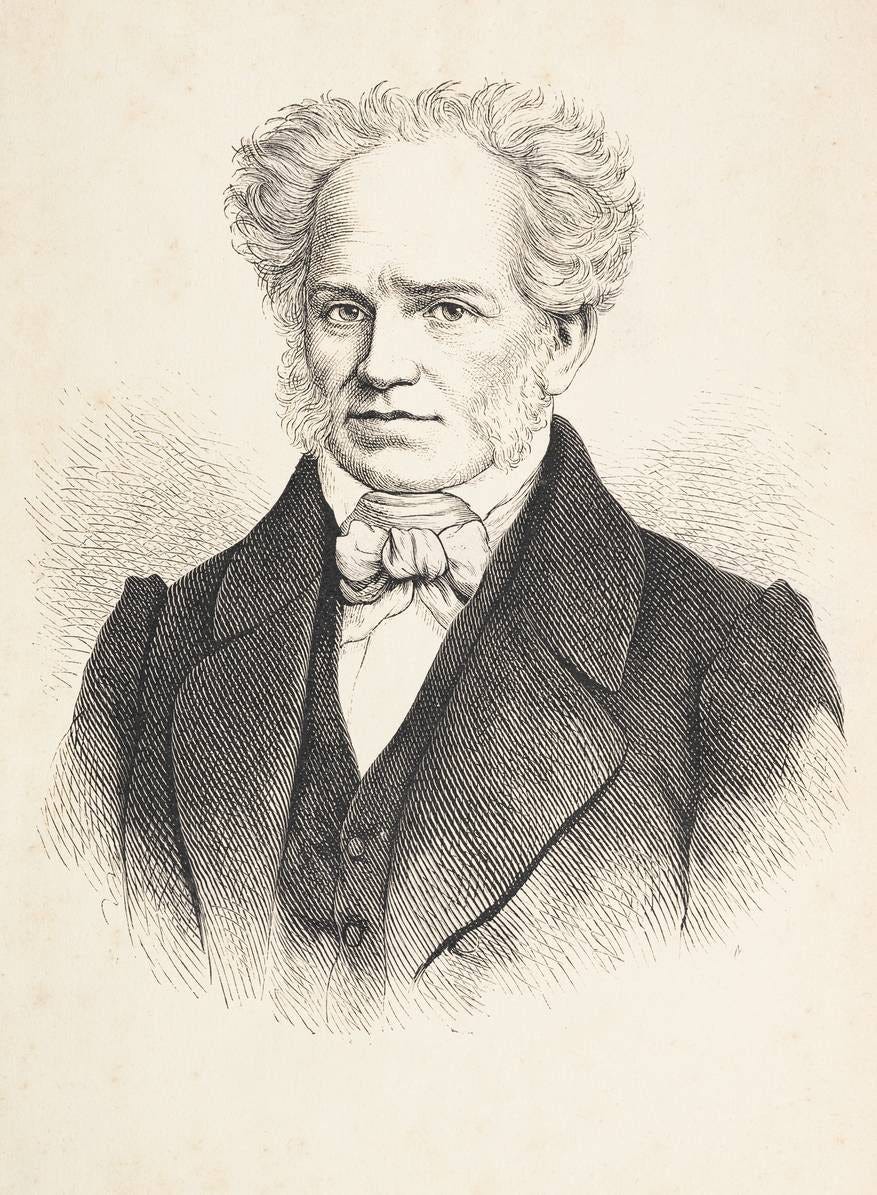
In a way, there is an odd tension between reading and thinking. 19th-century philosopher Arthur Schopenhauer describes reading as “a surrogate for thinking for yourself”:
It means letting someone else direct your thoughts…It may sometimes happen that a truth, an insight, which you have slowly and laboriously puzzled out by thinking for yourself could easily have been found already written in a book; but it is a hundred times more valuable if you have arrived at it by thinking for yourself. 1
How do we reconcile a point like this (and I do think Schopenhauer has a very good point) with our wholesome desire to fill our brains with good books?
For me, one solution is to read fewer but better books and read them slowly. In my young adult years, I bulldozed through dozens of titles in a year but could hardly recall the main message of the previous one before moving onto the next: it was important that I could check them off a list. Looking back, I think there was even a misguided optimism that reading “good books” worked like taking medicine: all I had to do was swallow them and they’d do the rest of the work. If only!
These days, I feel no shame in pausing to reread the same passage several times in a row in order to understand what the author is saying (I read a lot of old books, so this happens a lot). I also read the introduction and any other commentary, usually twice.
What’s interesting is that as I’ve done this, I’ve found that not only do I enjoy reading more — the experience of reading goes by faster when I slow down. Because I’m no longer impatiently checking the page numbers, I get to the end in what feels like record time. There’s probably a name for this phenomenon, but in the spirit of Schopenhauer I’m not going to look it up right now.
Because I actually understand what I’ve read (better than the “old days,” anyway), I am able to form thoughts of my own in response. In this way, reading and thinking aren’t at odds. But Schopenhauer points to a specific problem that I’ve also been guilty of: the problem of wanting to verify an idea you have by reading someone else’s thoughts, rather than developing the idea first on your own.
A real-life example: You and your sister are enjoying dinner at an Italian family restaurant one night and talking about world history. As the conversation deepens, you come to the following observation: there seems to be a strong correlation between literacy and a decrease in violence — could there be a causal connection as well? At this point in time, neither of you has studied this topic specifically. It’s an idea that’s popped up after swapping thoughts and examples over your chicken parmesan.
Do you: A) Rush to Claude (or other LLM of your choice) to see if it confirms your suspicions or B) sit with the idea for a few weeks (or years) and see what other things you observe and discover in the meantime.
I think many of us (including myself) would normally choose A. After all, don’t we want to deepen our knowledge? But knowing facts and theories doesn’t necessarily mean we’ve sharpened our critical thinking. Accurate information is often valuable but it can also distract us from something more important: wisdom (and now you know why many of the most interesting people in this world are children, while some of the most vapid are the ones who have the latest bestseller on their tablet but can’t give you a thoughtful reason for why they liked it).
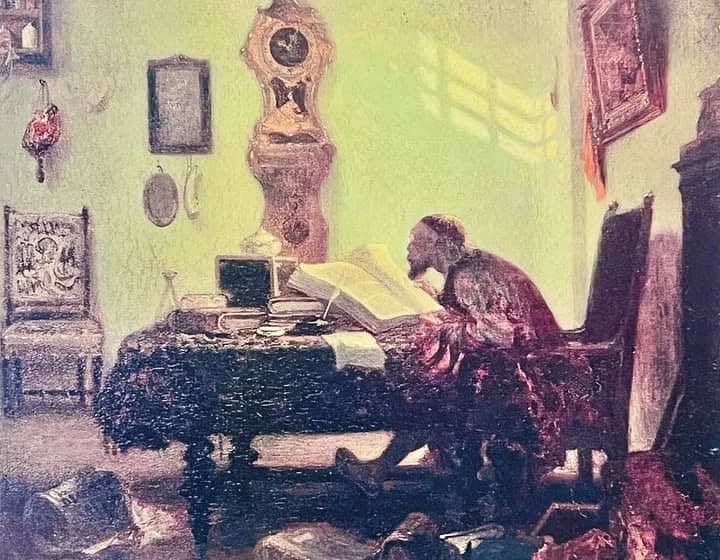
Even Montaigne, that 16th century sage who loved retreating to his tower, recognized that too much input can stifle growth and originality:
I should be incline to say that as plants are stifled with too much moisture, and lamps with too much oil, so too much study and matter stifles the action of the mind, which, being caught and entangled in a great variety of things, may lose the ability to break loose, and be kept bent and huddled down by its burden. 2
Done right, reading makes us wiser and more thoughtful. It delights our brains by clarifying and solidifying nuggets of insight, especially when authors across time and cultures concur with one another. Instead of viewing reading as consuming a calorie-dense banquet, it might be better to think of it as panning for gold: a lot of it is just rocks, and that’s okay. What we are looking for is treasure that stands out from the rest, and that takes effort.
And if we’re to recognize the gold when we see it, we must already have some rudimentary critical thinking skills, the beginning of wisdom. And that can only happen when we set aside our smartphones, our tablets, and yes, even our hardback copy of Seneca or Tolstoy and just sit alone for a while with our thoughts. Or go grocery shopping or go to dinner with a loved one and keep living life while our brain takes the time it needs to process and make connections.
What do you think of Schopenhauer’s claim that books are a “surrogate for thinking for yourself”?
From Parerga and Paralipomena.
From Montaigne’s essay, “Of books.”
I’m having a meta moment where I’m thinking about how I’ve just read these wonderful insights instead of arriving at them on my own! Not feeling any guilt about it, just noticing.
This is reminding me of a time when I was exposed to the idea of enjoying learning as an activity in itself, separate from the knowledge gained through it. I previously thought that when people said they “like learning” that they enjoy the accumulated knowledge they gain from learning. But I think it’s also possible to simply enjoy the process of learning itself as a joyful experience. Sort of like the way someone could enjoy the process of playing piano even if they’re not producing masterworks. This feels related to what you’re talking about, but I also feel a thread of distraction in it - sometimes I think we read not just to fast-track our own thinking and learning, but to deliberately avoid facing some of our own thoughts and feelings. Like many things in life, the activity itself isn’t necessarily helpful or hurtful, but the intention we bring to it will largely determine the outcome.
In the spirit of your more “in-process” writing for this piece this comment isn’t really a final conclusion on anything, just sharing what came up for me when reading this piece. Thanks for sharing!
Oh, am I excited to be in conversation with you!
Sometimes, I catch myself sitting with an open book on my lap, gaze lost in space, having such thoughts! As if the mere presence of certain authors via paper and ink whips up my mental circulation.
I love your experience with reading slowly. I wonder if I'll be able to really give myself permission to do that. There is so much I am curious about... and I must admit, so much that I feel I need to research before I can dare to write about it myself.
I have started reading voraciously not that long ago. Sometimes I feel desperate about how much I forget... and then I realize that my reading has been sowing seeds, underground and invisible, that intertwine with each other and make crazy thought hybrids. I have been nurturing the belief that this happens precisely because the learning lands in the deeper subconscious fields rather than the withering light of consciousness.
But maybe I'm just looking for excuses to justify my addiction to that thrill when a writer opens up the doors to whole new landscapes of thought for me.