

Self-Control Is Not the Same for All of Us
How to spin your fate, the way you want it

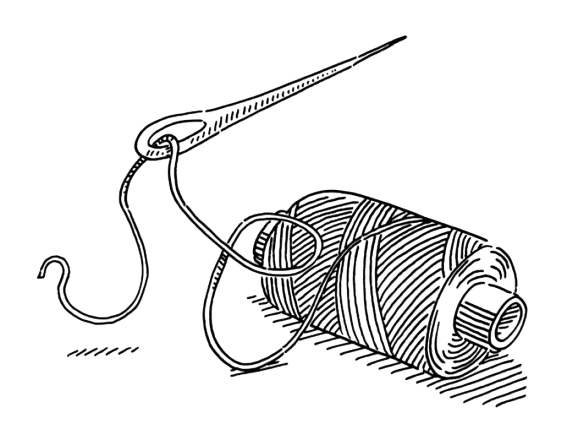
Almost 60 years before the discovery of neural pathways, the psychologist William James wrote about “grooves of habit” in the mind. He prophesied:
“Could the young but realize how soon they will become mere walking bundles of habits, they would give more heed to their conduct while in the plastic state. We are spinning our own fates, good or evil, and never to be undone.” 1
Aristotle gives similar counsel in his Nicomachean Ethics: “It makes no small difference, then, whether one is habituated in this or that way straight from childhood, but a very great difference — or rather the whole difference.” 2 (No pressure, of course).
Aristotle, James, and plenty of others since have understood that habits form identity, which in turn determines the trajectory of our lives. Just as a seamster cannot easily undo his threading, neither can we easily undo the years of compounded inaction, indecision, or eating too few vegetables (the opposite is luckily true as well). The wonderful thing about “habit-spinning”, however, is that as long as you are still alive, it’s never too late to make meaningful changes. Often greater and faster than we thought possible.
As with so many other things, habit-spinning involves a paradox: to successfully change yourself you must believe in yourself, and yet we are not all equally capable of every kind of change. Self-control is a key part of forming habits, but self-control doesn’t work the same for everyone. This isn’t a truth most of us want to hear, especially if we’re used to the old can-do attitude of “just set your mind to it.”
Fortunately, what I’ve come to learn about self-control (and habits) is both more complex and yet at the same time, more liberating.
“Trait” Self-control versus “State” Self-control
Michael Inzlicht is a psychologist who specializes in self-control — a word he claims has become far too misunderstood. In his years of research, he’s discovered that there are two essentially different types of self-control: “trait” and “state.” 3
“Trait” self-control is deeply ingrained; the person who wakes up at 5 AM every morning to take a walk through the woods before chopping her own firewood and cooking a giant breakfast is a classic example of this. Because these habits are deeply ingrained in her lifestyle, everyone sees her as “disciplined” and admirable.
“State” self-control, on the other hand, is temporary — we often use the term “willpower.” Common examples include forcing yourself not to leave a snarky comment on social media. Or passing up the offer for a second piece of chocolate chiffon pie. Willpower works best in moderation; it’s not hard to imagine that if these scenarios were repeated daily, we’d quickly cave in to snarking and pie-eating (I know I would).
The problem, Inzlicht says, is that people conflate “state” with “trait” self-control: they assume that the person waking up early every day and chopping firewood is performing some sort of Herculean feat of grit and perseverance. It’s just not true.
In fact, Inzlicht and his colleagues were surprised in their studies to find that the oppositewas true: people with “trait” self-control used less “state” self-control (willpower) than others when doing their tasks. The most reasonable conclusion is that this is because they didn’t need willpower; abstaining from potato chips or blocking time to study for an algebra exam just wasn’t as difficult for them as it was for those who didn’t have “trait” self-control. (This may explain why my dad has no problem rising at 5:30 AM; the coffee may help, or it may be a confounding variable).
But surely, you wonder, doesn’t willpower lead to developing self-control as a trait? To some extent, yes. The first time any of us do a demanding activity will probably be the hardest. But we don’t all experience dopamine and endorphins the same way, and while our neurochemistry is too complex to map out (yet), psychologists like Inzlicht are becoming convinced that self-control doesn’t work the same for all of us.
This is not an excuse, however, to give up on trying to be a better, more fulfilled person — just the opposite. Accepting the areas we’re limited in allows us to let go and find areas that we’re strong in, or that we care about. It’s a reminder to listen to the Delphic oracle’s admonition to “know thyself”: you can feel free to ignore the retired drill sergeant who thinks you should make your bed every day if tidy beds do nothing for you, but you’re not off the hook for eating more cruciferous vegetables. Or whatever it is that does make a rewarding difference.
When we understand ourselves and our limitations, we can identify our strengths and build habits — and an identity — that work within the parameters of our unique and mysterious DNA.
Our limits are the starting – not the ending – point
Once we identify the things we care about and feel rewarded for doing and make peace with the ones that don’t, we’re truly free to create ourselves — the best versions of ourselves. We curate the “bundles of habits” that form our character and identity.
In this way, creating (and keeping) habits is very much a lifelong process of self-discovery. To use a personal example, for years I thought I needed to be a morning person. It seemed like every “successful” person rose before the sun in order to accomplish all the most important tasks for the day, and I was doomed to a life of mediocrity if I didn’t.
I tried reward stickers, Post-it notes, an old-school alarm clock — nothing worked. There were only two times when I became a morning person by any stretch of the imagination: first, when I got a puppy, and second, when I had my daughter. However, they quickly outgrew their need for 5 AM feedings and potty breaks/diaper changes, and now neither of them are morning people, either. I’m grateful for this and have (mostly) made peace with the fact that I feel my best when I sleep until 8:30. That’s still earlier than Gustave Flaubert and James Joyce.
A conventional belief about habit-forming is that you decide what you want to do first, and then do it. Consider instead observing yourself and the decisions you make, and what impact that has on your identity and long-term growth (or lack thereof): for example, “I notice that I choose to read the news every day the minute I wake up; I’m a habitual newsreader.” It’s up to you to decide whether it’s good, bad, or neutral and whether a change is in order or not.
James Clear, of Atomic Habits fame, describes habits and actions as “votes” for your preferred identity:
“Every action you take is a vote for the type of person you wish to become. No single instance will transform your beliefs, but as the votes build up, so does the evidence of your new identity.” 4
Note that you are always voting, whether you realize it or not. Many of us vote unconsciously, only to look back years later with more than a twinge of regret. The easiest and most profound way you can create new habits and a new self is by simply paying attention to each moment, each action, each tiny piece of feedback. Nietzsche was right when he said, “You are the helmsman of your existence,” but we can’t steer the ship on autopilot.
“Thinking and self-creating are inseparable,” the psychologist and essayist Rollo May affirms:
“Human freedom involves our capacity to pause between stimulus and response and, in that pause, to choose the one response toward which we wish to throw our weight. The capacity to create ourselves, based upon this freedom, is inseparable from consciousness or self-awareness.” 5
It’s no easy matter to navigate the space between the determined parts of our personality and physique (including how much self-control we have), and the type of person we want to become. But as we pay attention to ourselves and learn about ourselves, it gets easier.
In a harder moment — this has certainly happened with me — you may ask, “What if I’m ‘not meant’ to do this thing I want so badly?” The answer I’ve come to is that it’s a moot point: if you want something badly enough and if your vision is flexible enough, you are probably capable of it. Aim for the moon or the planets, and you’ll still end up well beyond the exosphere.
Our limitations and quirks are not the biggest threat to our future growth — our doubts are. So is our anxiety. And both of those are neatly disguised under the many excuses we use to procrastinate. In his book Wind, Sand, and Stars, the French aviator and writer Antoine de Saint-Exupéry remarks:
Nobody grasped you by the shoulder while there was still time. Now the clay of which you were shaped has dried and hardened, and naught in you will ever awaken the sleeping musician, the poet, the astronomer that possibly inhabited you in the beginning. 6
He is right that, depending on how much time has passed, some dreams may no longer be possible. We are not able to unweave the entire bundle of habits and experiences that have become us. However, the possibilities still left to us are vaster and wider than our imaginations can grasp. As long as we understand ourselves and are willing to put in the work, we have the ability to spin our own fates in the direction we wish.